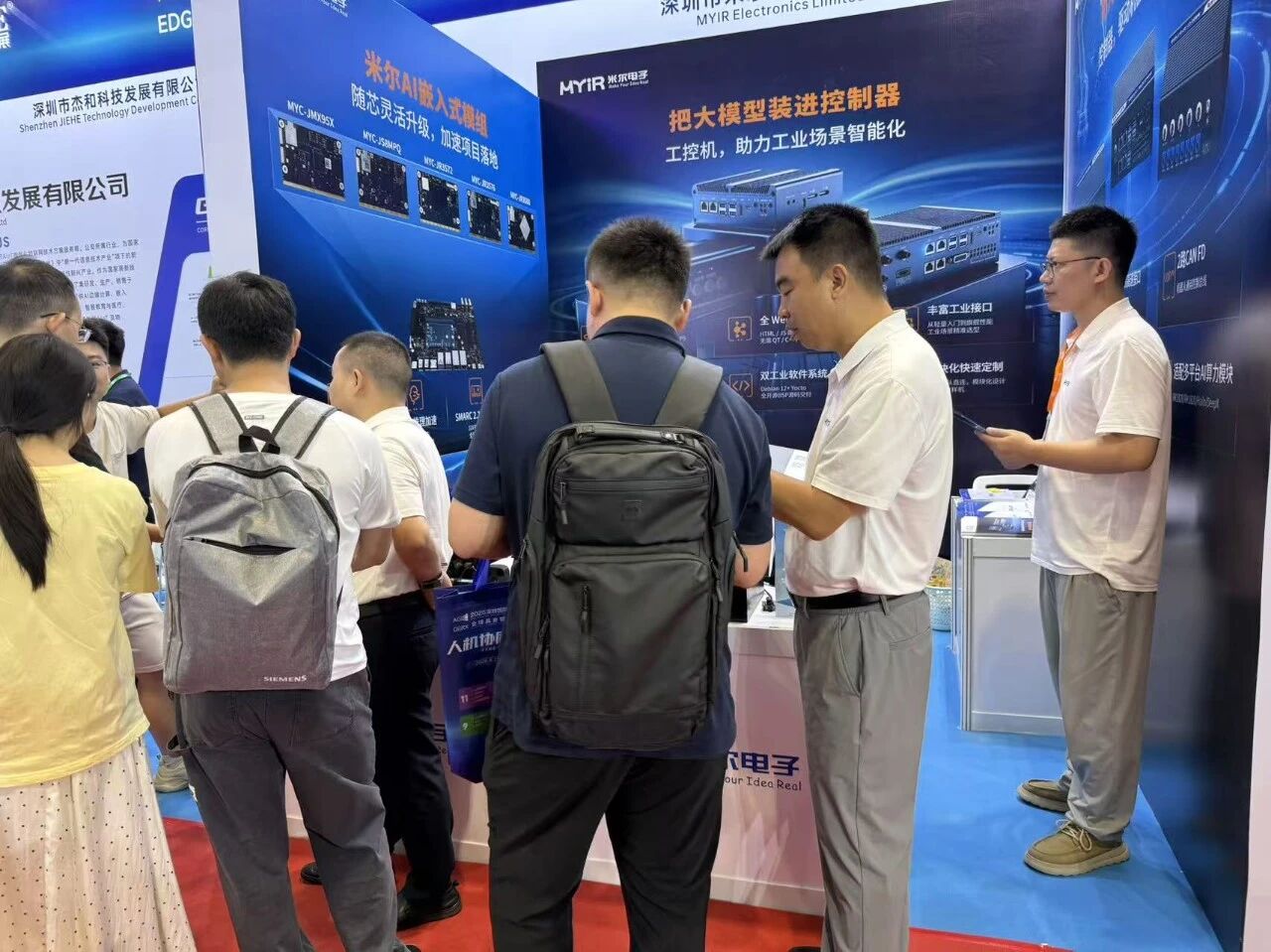
On August 26, 2026, the highly anticipated IOTE 2026 (the 25th International Internet of Things Exhibition) kicked off in grand style at the Shenzhen World Exhibition & Convention Center (Bao'an New Hall). As a leading global manufacturer of embedded processor modules, MYIR Electronics made a major appearance at Booth 12B57-6 in Hall 12, showcasing its new RK3576 industrial PC series and multiple demonstration platforms. The company presented a comprehensive, one-stop embedded solution portfolio spanning everything from core boards to complete systems, and from industrial control to intelligent robotics. The MEC-B5760 controller, paired with the RK1828 computing card, supports the unified ingestion of video sources via protocols such as V4L2, RTSP, ONVIF, and GB28181, while allowing independent NPU model configurations for different channels. The RK1828 supports the concurrent operation of compact CNN models and large-scale VLM models, enabling real-time object detection and semantic scene understanding. Leveraging model packages, an algorithm factory, and pipeline orchestration—complemented by RGA/MPP/NPU hardware acceleration and multi-channel WebRTC previewing—this solution delivers out-of-the-box edge AI capabilities for scenarios such as smart campuses, industrial inspections, and construction site safety; it attracted numerous industry clients for in-depth discussions on its very first day.
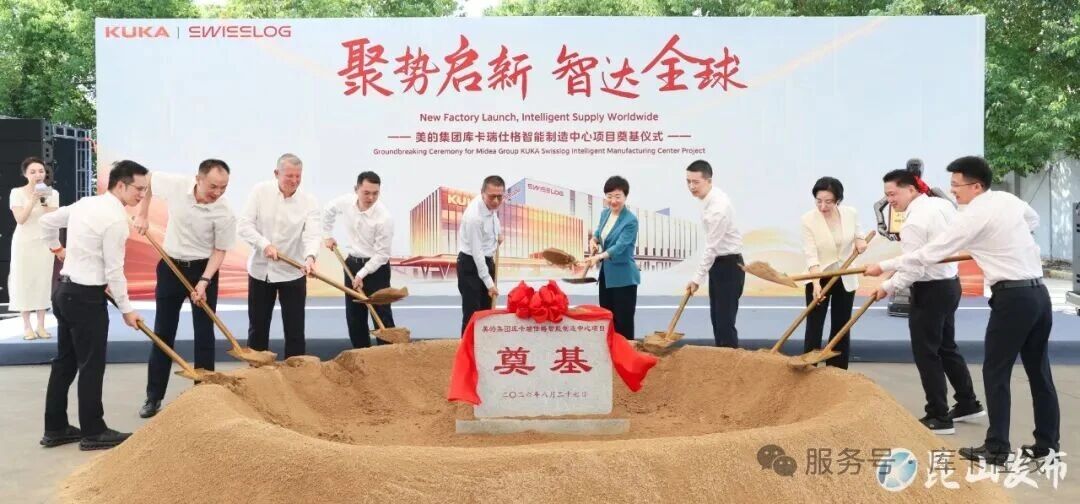
On August 27, the groundbreaking ceremony for the Midea Group KUKA-Swisslog Intelligent Manufacturing Center project was held in Kunshan. Chen Liyan, Secretary of the Municipal Party Committee, participated in the groundbreaking and met with a delegation that included Gu Yanmin, Vice President of Midea Group and Chairman of the Supervisory Board of KUKA Group; Wang Hui, a member of the Party Committee and Chief Engineer of Shanghai Aircraft Manufacturing Co., Ltd.; and Christoph Schell, CEO of KUKA Group. Municipal leaders Sheng Jianfeng and Zhu Yehua also attended the event. Midea Group plans to increase investment by $30 million in the KUKA-Swisslog Intelligent Manufacturing Center project. The initiative aims to expand KUKA’s existing industrial robot production capacity while introducing Swisslog’s core technologies in smart warehousing and logistics. It involves constructing flexible, light-payload robot production lines capable of handling diverse application scenarios, as well as smart warehousing and logistics systems serving industries such as automotive, home appliances, and pharmaceuticals. The project seeks to establish a comprehensive product portfolio encompassing KUKA robots, automotive automation, industrial automation, and Swisslog logistics solutions. Upon reaching full production capacity, the project is projected to generate an annual output value exceeding RMB 3 billion.
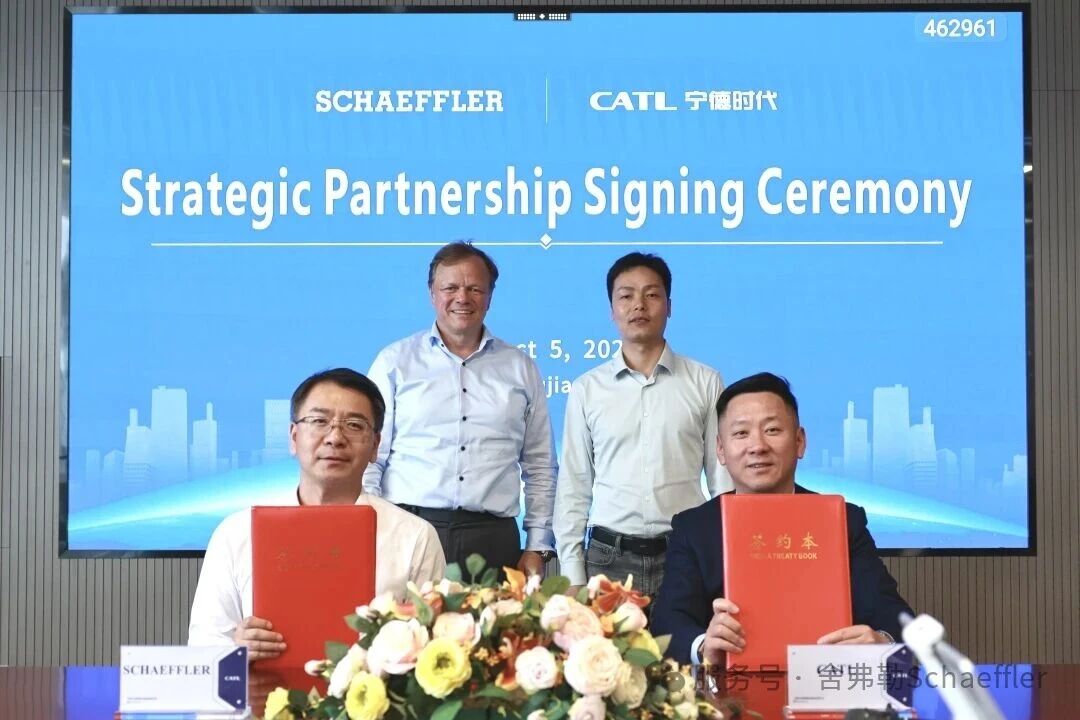
On August 5, Schaeffler, a technology company specializing in drive technologies, signed a memorandum of understanding with CATL, a global leader in zero-carbon new energy technologies. Building on existing customer projects, the partnership focuses on the joint development of automotive battery management systems, all-in-one energy units, and other related technologies. Through this collaboration, the two companies will deepen their strategic partnership, integrate their respective strengths in technology R&D and industrialization, and jointly drive the implementation of innovative electrification solutions for the European and other overseas markets. As a key step in deepening their strategic partnership, the collaboration focuses on two main areas: first, the joint development of battery management system solutions tailored to the needs of European vehicle manufacturers—a project for a European client has already been secured; and second, the collaborative creation of "all-in-one" energy unit products, driving the deep integration of high-voltage electronics and electromechanical systems. By leveraging their complementary strengths, the two parties will lay a solid foundation for delivering high-performance, highly integrated, and competitive electrification solutions.
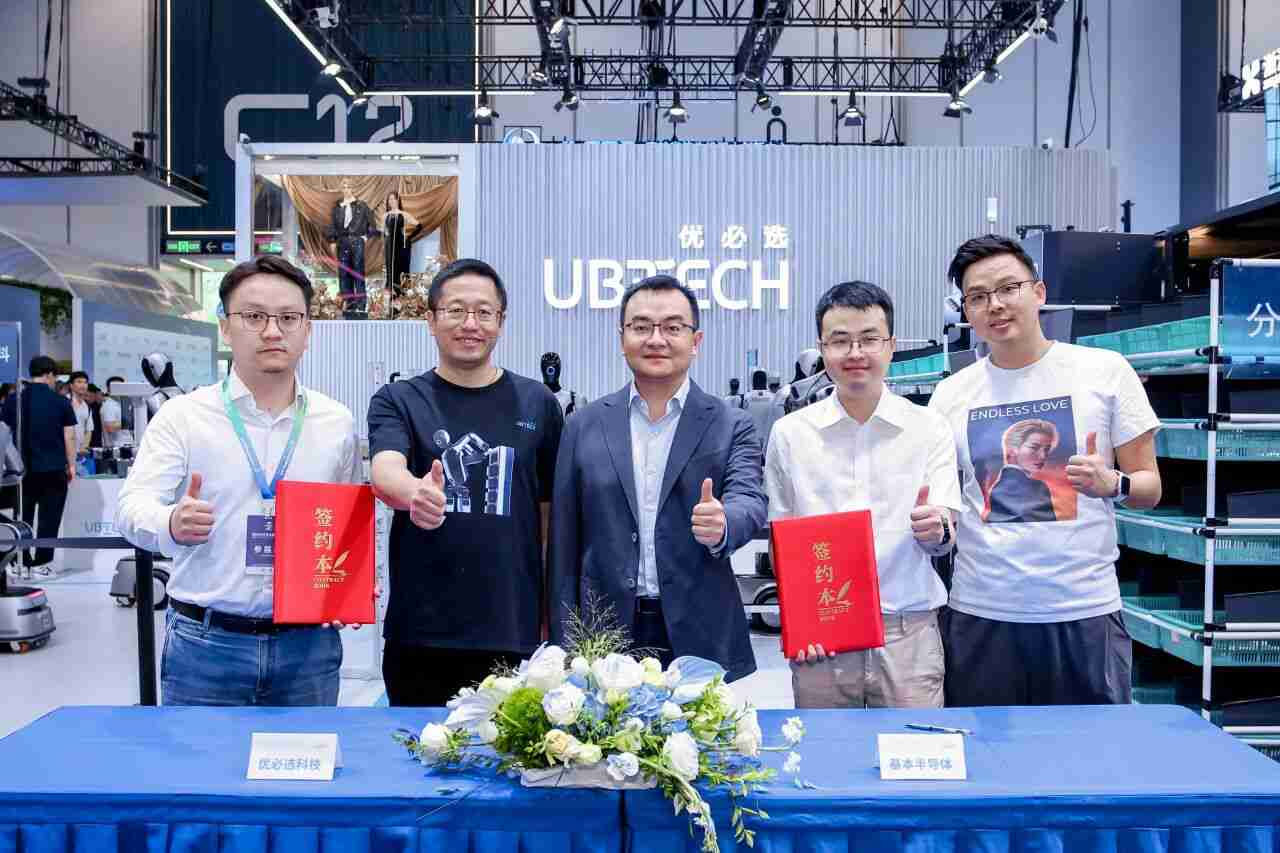
On August 19, at the 2026 World Robot Conference, UBTECH Robotics Corp. Ltd. (Stock Code: 9880.HK; hereinafter referred to as "UBTECH") and Shenzhen BASiC Semiconductor Ltd. (Stock Code: 9971.HK; hereinafter referred to as "BASiC Semiconductor") officially signed a strategic cooperation agreement. Leveraging UBTECH’s technological and mass-production strengths in embodied AI humanoid robots alongside Basic Semiconductor’s core technologies and industrialization capabilities in silicon carbide (SiC) power devices, the two parties will engage in deep collaboration. Their partnership will focus on areas such as optimizing energy efficiency and developing low-power, long-endurance products for humanoid robots, thereby accelerating the large-scale application of SiC power devices in the field of embodied AI robotics.